
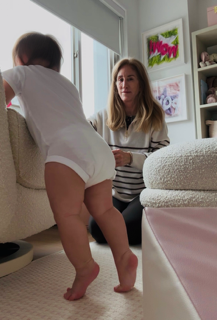
 A fascinating aspect of infant development is that babies rarely stop trying. When a movement feels difficult, they don’t give up. Instead, they find another way. The ability to adapt is one of the most remarkable things about the developing nervous system. Babies are natural problem-solvers. They experiment, repeat, adjust, and try again. It’s one of the reasons I love watching them play. Every movement tells me something about how they are learning to interact with their world.
Parents often celebrate the outcome, and they should. Their baby reached the toy, rolled across the room, or found a way to sit independently. Those are wonderful moments. As a pediatric physical therapist, I am interested in the strategy the baby used to accomplish the task. Sometimes the movement looks effortless. Other times, the baby is working much harder than you might expect. That difference matters.
Motor development isn’t simply a matter of whether a baby can or can’t do something. In reality, there is often a wide space between those extremes. A baby may achieve a milestone while relying on movement patterns that require more effort than necessary. They may avoid rotating their trunk, consistently lead with one side of the body, stiffen rather than shift their weight, or move so quickly they never pause to balance. To most parents, these differences are difficult to recognize. The milestone happened. That’s the part everyone notices. I’m looking at everything that happened before it.
What catches my attention first isn’t always what a baby does—it’s what they consistently avoid. Some babies rarely spend time on their side. Others avoid reaching across their body. Some become frustrated when they need to rotate, while others seem content remaining in one position for long periods. Parents often assume their baby simply has preferences. Sometimes that’s true. Other times, those preferences are clues.
Babies naturally practice movements that feel comfortable and successful. If rotating is difficult, they may rotate less. If shifting weight feels unstable, they may choose strategies to stay centered. The less they practice challenging movements, the fewer opportunities they have to develop the strength, coordination, and confidence those movements require. That doesn’t mean something is wrong. It means I’m paying attention.
Another thing I watch carefully is how much effort a movement requires. Two babies may both crawl across the room, but one moves with fluid, effortless coordination while the other works hard. They may hold their breath, stiffen their trunk, move with little rotation, or fatigue quickly. Both babies reached the same destination, yet they took very different paths. Movement quality often tells us things milestones alone cannot.
I also look for variability. Healthy motor development is unpredictable. Babies roll to both sides. They pivot in circles. They experiment with different ways to reach a toy. They fall over, laugh, try again, and discover new solutions almost every day. When movement becomes repetitive, I become curious. Does every transition happen the same way? Does every reach involve the same arm? Does every attempt to move begin with the same leg? Variability is a hallmark of a healthy nervous system. It reflects flexibility, adaptability, and confidence. Babies with many movement options are often better equipped to solve new movement challenges as they grow.
Perhaps the biggest lesson I have learned is that compensation is not failure. Compensation is information. It tells me what a child’s body is trying to accomplish and where they may need more support. Sometimes that support is as simple as changing the environment, encouraging more floor play, or introducing activities that gently challenge a movement pattern the baby has been avoiding. Early intervention isn’t about correcting every difference we see. It’s about recognizing opportunities while the nervous system is developing rapidly.
Parents don’t need to become movement experts. They don’t need to analyze every roll or reach. I encourage families to spend less time worrying about milestone charts and more time watching their children play. Notice what makes them smile, what captures their curiosity, how they solve problems, and whether they explore many ways to move. The answers are often right there on the floor.
After more than three decades as a pediatric physical therapist, one lesson has remained remarkably consistent: babies are always communicating through movement. Sometimes they tell us that a skill is becoming easier or that they need a little more practice, or they quietly show us a movement pattern that deserves a closer look.
The body whispers before it shouts.
The sooner we learn to notice those whispers, the more opportunities we have to support strong foundations—not only for the next milestone, but for all the milestones still to come.