
Pediatric Physical Therapy for Balance and Coordination in NYC & the Hamptons
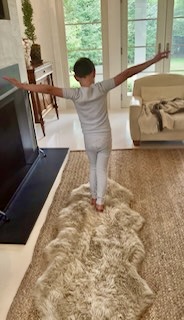
Some children seem to move through the world with ease. Others have to work harder to keep their balance, coordinate their bodies, or learn new physical skills. You may notice that your child trips more often than other children, has difficulty standing on one foot, struggles with stairs, or avoids climbing and playground activities. Running may look awkward. Jumping, hopping, catching a ball, riding a bike, or learning a new sport may take considerably more practice. Sometimes parents simply describe their child as “clumsy.” I prefer to look more closely at what is actually making movement difficult.
Balance Is More Than Standing on One Foot
Balance is constantly changing. Your child uses balance while walking across the playground, stepping off a curb, reaching for a toy, climbing stairs, kicking a ball, running, jumping, and changing direction. Standing still on one foot tells me something, but it doesn't tell me everything. I want to see how your child controls the body while moving. Can your child recover after losing balance? Adjust to an uneven surface? Step over an obstacle? Land after a jump? Slow down or change direction without falling? Dynamic balance is an important part of everyday movement.
Coordination Involves the Whole Body
Coordination allows different parts of the body to work together smoothly and efficiently. Your child uses coordination when running, climbing, jumping, throwing, catching, kicking, swimming, riding a bicycle, or participating in sports. Some children have difficulty coordinating the arms and legs together. Others struggle more with timing, sequencing movements, or adjusting the body quickly when an activity changes. These differences can make physical activities require much more effort. I want to understand which parts of the movement are difficult rather than simply describing your child as uncoordinated.
Frequent Tripping and Falling
All children fall. Falling is part of learning to move. I become more interested when a child falls much more frequently than expected for their age, continues tripping on relatively level surfaces, or has difficulty recovering balance when something unexpected happens. There can be many reasons. Strength, foot and ankle stability, balance reactions, coordination, attention, body awareness, vision, endurance, and the way your child clears the feet during walking or running can all influence how often falls occur. Rather than focusing only on the number of falls, I look at what is happening immediately before and during them.
Strength and Postural Control
Balance and coordination depend partly on having enough strength and postural control to stabilize the body during movement. A child may have enough strength to perform an isolated movement but still have difficulty controlling the trunk and hips while running, jumping, climbing, or standing on one leg. I often look closely at trunk and hip stability because they provide support for movement of the arms and legs. Foot and ankle strength also matters. If the base is unstable, maintaining balance farther up the body can become more difficult.
Single-Leg Balance
Children spend a surprising amount of time on one leg. Walking briefly places the body over one leg with every step. Running increases that demand. Stairs, hopping, kicking, getting dressed, stepping over obstacles, and many sports require even greater single-leg control. When single-leg stability is difficult, you may see your child rush through a movement, reach for support, lean the trunk, or quickly put the other foot down. I look at why maintaining that position is difficult. Strength, balance reactions, foot and ankle stability, hip control, and body awareness may all contribute.
Jumping and Hopping
Jumping and hopping combine strength, balance, timing, and coordination. Your child needs to generate enough force to leave the ground and then control the body when landing. Hopping is even more demanding because takeoff and landing happen on one leg. Some children can jump forward but struggle to land without losing balance. Others have difficulty jumping with both feet together or learning to hop on one foot. These activities give me useful information about how your child's strength and coordination work together during more challenging movement.
Running and Changing Direction
Running is more complex than simply walking faster. It requires balance, strength, coordination, timing, and the ability to briefly support the body on one leg. As children get older, they also need to accelerate, slow down, turn, and change direction quickly. You may notice that your child's running looks stiff or awkward, that the arms don't move naturally with the legs, or that your child has difficulty keeping up with peers. Some children run reasonably well in a straight line but struggle when they have to stop, turn, or react quickly. Watching those transitions can tell me a great deal about balance and movement control.
Stairs and Uneven Surfaces
Stairs require strength, balance, coordination, depth perception, and confidence. A younger child may naturally use a step-to pattern. As children develop, they typically become more comfortable alternating feet and managing stairs with less support. I look at whether your child needs the railing, consistently leads with one leg, avoids stairs, or has difficulty controlling the body when coming down. Grass, sand, hills, playground surfaces, curbs, and other uneven terrain add another challenge. Children need to make continuous adjustments as the surface beneath them changes. Difficulty on these surfaces may reveal balance or stability problems that aren't obvious when your child walks across a smooth floor.
Playground Skills
The playground gives children an enormous amount of movement practice. Climbing ladders, moving across bridges, going up and down steps, using swings, navigating uneven surfaces, and climbing onto or off equipment require strength, balance, coordination, and motor planning. Some children naturally seek these challenges. Others stay close to the ground or repeatedly choose activities that feel safer. A child doesn't have to love every piece of playground equipment. I become more interested when avoiding physical challenges begins to limit play or participation with other children.
Ball Skills
Throwing, catching, kicking, and striking a ball require the eyes, body, arms, and legs to work together. A child needs to judge where the ball is going, prepare the body, time the movement, and adjust quickly if the ball doesn't travel exactly as expected. Some children find these activities particularly difficult even when their general strength is good. I may use ball activities during an evaluation or treatment because they provide useful information about timing, coordination, balance, and how your child responds to a moving target.
Motor Planning and Learning New Skills
Some children can perform familiar movements fairly well but have much more difficulty learning something new. They may need extra demonstration, repeated practice, or more time to figure out how to organize their body for an unfamiliar activity. This is sometimes described as difficulty with motor planning. I look at how your child approaches a new movement. Does your child understand what to do but have difficulty organizing the body? Does the movement become easier with practice? Is one part of the sequence particularly difficult? Those observations help me decide how to teach a new skill more effectively.
Body Awareness
Children need an internal sense of where their body is in space. Body awareness helps your child know how much force to use, where the arms and legs are positioned, and how to adjust the body without constantly looking at every movement. A child with decreased body awareness may bump into things, use too much or too little force, or have difficulty copying body positions. These behaviors can have several explanations, so I don't make assumptions from one observation alone. I look at body awareness as one part of the child's overall movement.
Foot and Ankle Stability
The feet and ankles create the base for standing, walking, running, and balance. Significant pronation, ankle instability, or difficulty controlling the foot can affect what happens farther up the body. Your child may compensate by changing the position of the knees, hips, or trunk or by using a wider base of support. I look at the feet as part of the whole movement pattern. Not every child with flat feet or pronation needs treatment or orthotics. What matters is whether alignment or instability is affecting balance, comfort, endurance, gait, or function.
Endurance Can Affect Coordination
A child may move fairly well at the beginning of an activity but look very different after becoming tired. As fatigue increases, posture may collapse, the feet may drag more, balance reactions may become slower, and coordination may decrease. That is why I pay attention to endurance as well as the ability to perform a skill once. If your child can technically complete an activity but cannot sustain it long enough to participate comfortably with peers, that matters.
Confidence and Physical Activity
Children usually know when physical activities are harder for them than for their peers. A child who repeatedly falls, struggles to catch a ball, or has difficulty learning a new playground skill may begin avoiding those situations. That doesn't necessarily mean your child lacks motivation. Sometimes avoidance develops because the activity requires so much effort or because repeated difficulty has made your child less willing to try. I want to find an appropriate level of challenge where your child can experience success while still developing new skills.
Balance and Coordination in Sports
As children get older, differences in balance and coordination may become more noticeable when they begin organized sports. Soccer, tennis, basketball, dance, gymnastics, martial arts, skiing, swimming, and other activities place different demands on the body. One child may have difficulty with running and changing direction. Another may struggle with catching or kicking a ball. Someone else may have the strength for an activity but lack the single-leg control or timing needed to perform it efficiently. Physical therapy isn't about turning every child into an athlete. I want your child to have the physical skills needed to participate in the activities they enjoy.
When Balance and Coordination Difficulties Affect Everyday Life
Not every child who is less coordinated than a sibling or classmate needs physical therapy. Children develop skills at different rates and have different strengths. I become more interested when balance and coordination difficulties consistently interfere with daily activities, playground participation, sports, stairs, bike riding, keeping up with peers, or your child's confidence in movement. Frequent falls, persistent difficulty learning age-appropriate motor skills, or increasing avoidance of physical activities may also be reasons for a closer look.
What a Pediatric Physical Therapy Evaluation Includes
I begin by talking with you and your child. I want to know what you have noticed, which activities are difficult, whether teachers or coaches have raised concerns, and whether your child avoids certain physical activities. Then I watch your child move. Depending on age and ability, I may look at walking, running, stairs, jumping, hopping, single-leg balance, squatting, climbing, ball skills, and the ability to change direction. I also assess strength, posture, flexibility, foot and ankle stability, coordination, body awareness, motor planning, and endurance when appropriate. Standardized testing may provide additional information, but I combine those results with clinical observation. How your child performs a movement often tells me as much as whether the movement can be completed.
Physical Therapy for Balance and Coordination
Treatment depends on what I find. One child may need more trunk and hip strength. Another may need to work on foot and ankle stability, single-leg balance, motor planning, or coordination. Often several factors are involved. Treatment may include obstacle courses, climbing, jumping, hopping, ball skills, balance challenges, strengthening, running, stairs, or activities that require your child to react and adjust during movement. I want therapy to feel purposeful and age appropriate. The goal isn't simply to improve a score on a balance test. I want the changes we make in therapy to carry over into your child's everyday life.
Practice Helps Build Motor Skills
Children learn movement by moving. A child who finds an activity difficult may naturally avoid it, which means they get less practice. Less practice can make it harder for the skill to improve. Physical therapy can help by breaking a difficult skill into manageable parts and giving your child opportunities to practice at the right level of challenge. As the skill becomes easier, we increase the difficulty. The goal is not endless repetition. It is meaningful practice that helps your child become more capable and independent.
Home Activities Should Fit Into Real Life
I don't want families to feel that every afternoon needs to become a therapy session. Sometimes the most useful activities are already available in everyday life. Walking on grass or sand, climbing at the playground, kicking a ball, riding a bike, playing catch, navigating curbs, or walking up a hill can all challenge balance and coordination. The activities I recommend depend on what your child needs to work on. A small number of useful activities performed consistently is often more realistic than a long exercise program that no one wants to do.
In-Home Pediatric Physical Therapy for Balance and Coordination
Working with your child at home allows me to see movement in familiar surroundings. Stairs, hallways, outdoor spaces, playgrounds, sidewalks, curbs, grass, and other everyday environments can become part of the evaluation and treatment. I can also see which physical challenges are actually affecting your child's daily routines rather than relying only on what happens in a clinic. Through Motor Skills Matter, I provide individualized in-home pediatric physical therapy for children with balance and coordination concerns throughout NYC and the Hamptons.
Why Choose Motor Skills Matter?
I am Dr. Tara Liddle, PT, MA, DPT, PCS, a Board-Certified Pediatric Clinical Specialist with more than 30 years of experience working with babies and children. My clinical experience includes pediatric development, balance, coordination, gait, posture, strength, orthopedic concerns, and functional mobility. I am NDT certified and have advanced training in pediatric movement and neuromuscular treatment. I am the author of Why Motor Skills Matter: Improve Your Child's Physical Development to Enhance Learning and Self-Esteem and a contributing author of the chapter “Physical Therapist Management of Cerebral Palsy” in Contemporary and Global Perspectives in Physical Therapy: Incorporating Clinical Practice Guidelines, published by Springer Nature. When I evaluate balance and coordination, I don't look only at whether your child can complete a task. I look at how the movement happens, how much effort it requires, and what may be making the skill more difficult.
Frequently Asked Questions About Balance and Coordination
- My child is clumsy. Does that mean something is wrong?
Not necessarily. Children vary considerably in coordination and physical ability. I become more interested when frequent falls, difficulty learning motor skills, or poor balance consistently affects everyday activities and participation.
- Why does my child trip so much?
There isn't one explanation for frequent tripping. Balance, strength, foot and ankle stability, coordination, body awareness, attention, endurance, and walking or running mechanics can all contribute. An evaluation can help determine which factors are most relevant for your child.
- Can physical therapy improve coordination?
Physical therapy can help children develop the strength, balance, motor control, and movement skills that contribute to better coordination. Children also need opportunities to practice skills at an appropriate level of challenge.
- My child doesn't like sports. Does that mean there is a coordination problem?
No. Not every child enjoys organized sports, and lack of interest doesn't mean there is a physical problem. I become more interested when your child wants to participate but physical difficulty repeatedly gets in the way, or when balance and coordination affect everyday activities beyond sports.
- My child has flat feet. Could that affect balance?
It can in some children, particularly when significant pronation or foot and ankle instability affects the base of support. Many children with flexible flat feet, however, have no pain or functional difficulty. I look at how the feet function during movement rather than deciding based on appearance alone.
- Can you help with bike riding?
Yes, when balance, strength, coordination, or motor planning is making bike riding difficult. Depending on your child's needs, we may work on the underlying skills that support learning to ride.
- Does my child need ongoing physical therapy?
Not necessarily. Some children benefit from a period of treatment. Others may need an evaluation, a home activity plan, and periodic follow-up. The recommendation depends on your child's specific needs and how much the difficulty is affecting function.
Helping Your Child Feel More Capable in Movement
Your child doesn't need to be the fastest runner, the best athlete, or the first one across the monkey bars. I want movement to be something your child can participate in with greater ease and confidence. If frequent falls, poor balance, difficulty learning new motor skills, or coordination concerns are making everyday activities harder, a pediatric physical therapy evaluation can help identify what may be contributing. Sometimes the answer is strength. Sometimes it is balance, foot and ankle stability, motor planning, or coordination. Often it is a combination. Understanding the reason gives us a much better starting point than simply telling a child to “be more careful” or “practice more.” Through Motor Skills Matter, I provide expert in-home pediatric physical therapy for balance and coordination concerns throughout NYC and the Hamptons.
Contact me to schedule a pediatric physical therapy evaluation.