
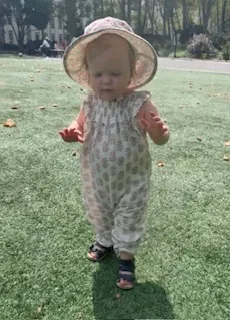
Why monitoring motor development after independent walking matters.
Over the years, I have worked with many babies who experienced subtle motor delays despite no obvious risk factors. They were born full-term. Their mothers had uncomplicated pregnancies, labors, and deliveries. No significant medical concerns or early signs suggested motor development might be challenging. Yet somewhere along the way, their motor development began to unfold differently.
Perhaps they weren’t rolling at seven months. Maybe they were sitting independently but couldn’t get into or out of sitting. Some commando-crawled for months without progressing to hands-and-knees crawling. Others pulled to stand but struggled to cruise, transition between surfaces, or take independent steps. These are often the babies I am called in to evaluate.
With physical therapy intervention, parent education, and purposeful play, we begin addressing the underlying movement challenges. We work on transitions, postural control, weight shifting, balance, strength, and coordination. Progress happens, and eventually we reach that exciting milestone: independent walking. Everyone is thrilled. But what happens next?
Sometimes, the Best Next Step Is a Break
When a toddler who has experienced early motor delays begins walking independently, I often recommend taking a break from regular physical therapy sessions. Not because walking means every motor challenge has resolved, but because children need time to practice, explore, and discover what their bodies can do. Walking is a new skill. It requires repetition, experimentation, and lots of opportunities to fall, recover, change direction, and try again. I want toddlers to experience the joy of moving independently without every movement becoming a therapeutic activity.
Parents often welcome this break. After months of appointments, home exercises, and close monitoring of milestones, families deserve a chance to enjoy their child’s progress. I also want parents to recognize the gains their child is making without me. These changes often become especially noticeable at playgroups, movement classes, birthday parties, and playgrounds. Parents begin seeing their toddler moving with other children, exploring unfamiliar environments, and participating in activities that may have seemed out of reach just a few months earlier. These experiences are important. They build independence and confidence. However, taking a break from therapy doesn’t necessarily mean taking a break from monitoring development.
Walking Is a Beginning, Not an Endpoint
For toddlers with a history of motor delays, I generally recommend a follow-up assessment about one to two months after independent walking begins. Because those first months of walking tell us a great deal about how a child’s movement system is developing. Early walkers typically use a wide base of support, hold their arms high for balance, and take short, somewhat stiff steps. These are normal characteristics of emerging walking.
As toddlers gain experience, we expect to see gradual changes:
- Arms begin to lower: The high-guard position becomes less necessary as balance improves.
- The base of support narrows: Feet gradually move closer together as stability and control develop.
- Steps become longer and more consistent: Stride and step length increase as coordination improves.
- Movement becomes more fluid: Walking looks less stiff and more efficient.
- Transitions become easier: Children gain confidence stopping, starting, turning, squatting, and changing direction.
These changes do not happen overnight, and every child develops at an individual pace. What matters is the overall progression. I am not simply looking at whether a toddler can walk across the room. I am looking at how they move, how they adapt, and what skills are emerging.
Beyond Walking: The Foundational Skills That Matter
Once independent walking is established, our attention needs to expand beyond getting from one place to another. Walking opens the door to new motor experiences. Toddlers begin climbing, stepping over objects, negotiating uneven surfaces, squatting during play, walking backward, and eventually running, jumping, and kicking. These skills are interconnected. They rely on developing postural control, balance, coordination, strength, and the ability to shift weight from one side of the body to the other.
Here are five foundational skills I look at during follow-up visits.
1. Weight Shifting and Single-Leg Balance
Before a toddler can kick a ball, they must be able to briefly shift their weight onto one leg while moving the other. I’m not expecting a young toddler to stand in a yoga tree pose. Single-leg balance begins developing through everyday movement and play. Activities such as stomping on bubbles or kicking a stationary ball encourage weight shifting, balance reactions, and brief single-leg support.
2. Squatting and Returning to Standing
Squatting is much more than bending down to retrieve a toy. It requires coordinated control of the hips, knees, ankles, and trunk. I want to see a toddler squat to pick up a toy and return to standing consistently without falling, sitting down, or pulling up on furniture. Something as simple as picking up toys from the floor and placing them in a container encourages this important skill.
3. Stepping Over and Around Obstacles
Walking across a flat floor is very different from navigating the real world. Toddlers need to learn to adjust their steps, lift their feet, change direction, and respond to obstacles. Walking on grass, stepping over low objects, and navigating around toys create opportunities to develop balance, motor planning, and adaptability.
4. Climbing and Controlled Transitions
Climbing requires children to coordinate their arms, legs, and trunk while shifting their center of gravity. It also encourages problem-solving and body awareness. Climbing onto and off low, stable surfaces, with appropriate supervision and assistance gives toddlers opportunities to practice these developing skills.
5. Balance Reactions and Movement Confidence
Toddlers need opportunities to experience small losses of balance and learn to recover. I often remind parents that not every wobble needs to be prevented. Safe movement challenges allow children to develop protective responses, balance strategies, and confidence. Activities such as dancing, changing direction while walking, or following a rolling ball provide opportunities to challenge balance safely. The goal isn't perfect balance; it’s a child who becomes increasingly comfortable adapting to movement challenges.
Why These Skills Matter Beyond Toddlerhood
When we think about motor development, we often focus on the big milestones: rolling, sitting, crawling, and walking. But motor development doesn’t stop once toddlers reach those milestones.
Think of higher-level activities like kicking a ball. It requires one-leg balance, weight shifting, trunk stability, timing, and coordination. Jumping requires coordinated force production, postural control, and the ability to absorb impact when landing. Running requires alternating single-leg support, balance, strength, and coordination. These skills develop through repeated movement experiences over time. Eventually, they become the foundation for riding a bicycle, playing playground games, learning sports, and navigating complex physical environments.
But this isn’t about creating future athletes. It’s about giving children the movement skills and confidence to participate fully in childhood. It’s about the toddler who can confidently explore the playground. The preschooler who can climb on playground equipment with friends. The child who feels comfortable joining a movement class or kicking a ball with classmates. Movement creates opportunities for social interaction, exploration, independence, and competence.
Why I Believe in Monitoring, Not Necessarily More Therapy
Not every toddler with early motor delays needs weekly physical therapy after learning to walk. Some children make excellent progress with time, practice, and opportunities to explore. Others continue to have challenges with balance, coordination, transitions, or emerging higher-level motor skills. That is why I believe follow-up monitoring is valuable. A visit one or two months after independent walking begins lets me observe how gait matures, assess emerging skills, and determine whether additional intervention is needed. Sometimes a few adjustments to a child’s daily play routine and a home program focused on specific movement goals are enough. Other times, persistent difficulties suggest that more therapy or further developmental evaluation could help. A history of early motor delays doesn’t necessarily mean a child will experience coordination difficulties later in childhood. But monitoring gives us an opportunity to recognize challenges that may persist or become more apparent as movement demands increase. The goal is not to keep children in therapy indefinitely. The goal is to recognize when intervention is needed or not, or when another set of experienced eyes can make a difference.
Movement Builds Movement
One of the most important messages I share with parents is that motor skills are not isolated achievements. They build upon one another. Rolling, sitting, crawling, transitioning, standing, and walking create opportunities for the body to develop new strategies and abilities. Walking is no different. It opens the door to the next stage of development. For children who have experienced early motor delays, reaching independent walking deserves celebration. Give them time and opportunities to explore. Let them discover what they can do. But don’t forget to look beyond the milestone. Walking may be the goal we worked toward, but we're really building confidence, independence, and participation.
Motor Skills Matter
Turning confusion into confidence through movement, education, and purposeful play.
If your toddler has a history of early motor delays and has recently started walking, a developmental follow-up can provide insight into their gait, balance, coordination, and emerging movement skills.
Motor Skills Matter offers pediatric physical therapy and developmental consultations in NYC, the Hamptons, and virtually. Learn more at motorskillsmatter.com.